
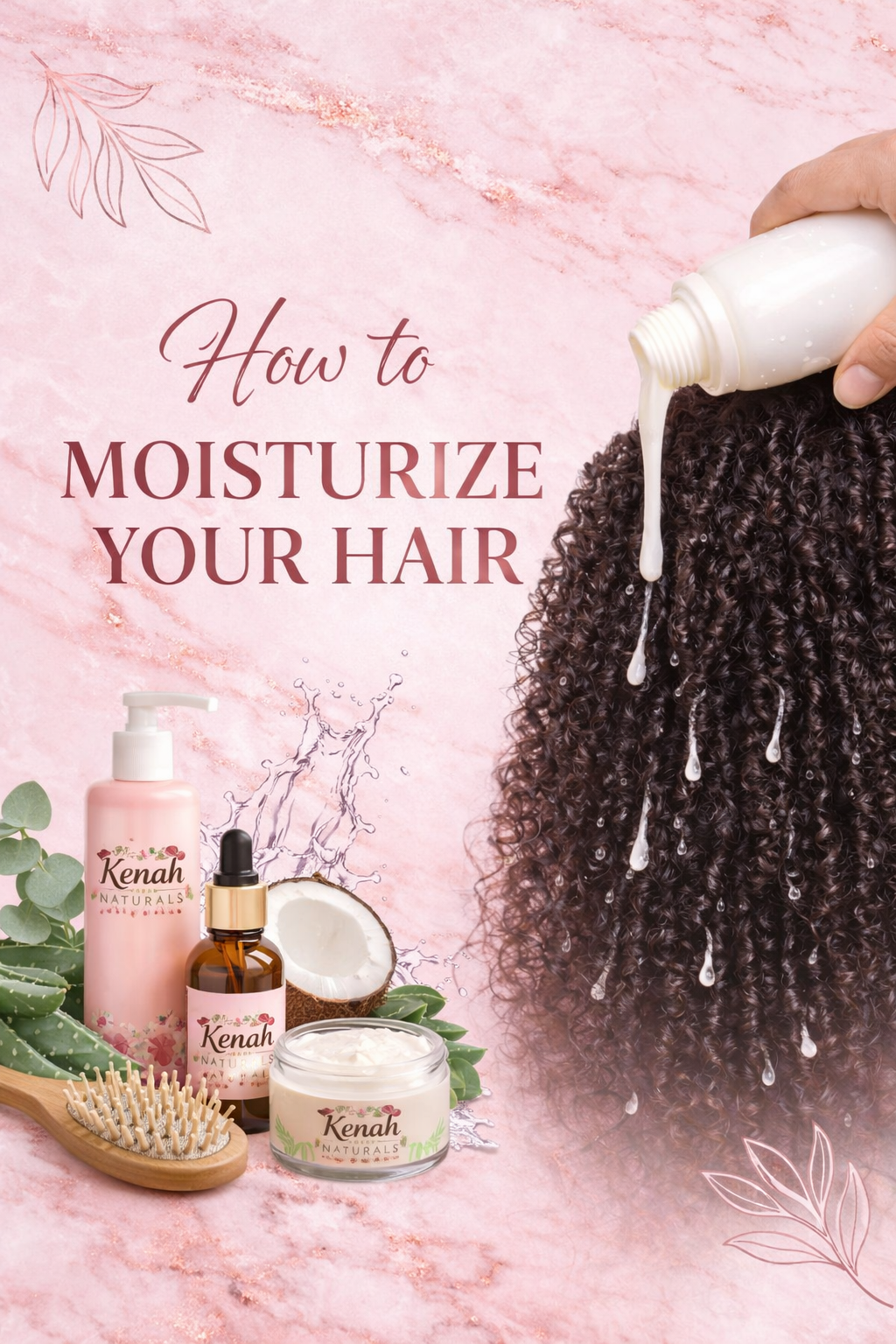
Moisturizing your hair is one of the most important and often misunderstood parts of hair care. Many people focus on styling, growth, or shine, but without proper moisture, hair becomes vulnerable to dryness, breakage, and long-term damage.
Healthy hair depends on maintaining water inside the hair shaft and protecting it from unnecessary loss. Moisturization isn’t a single product or step; it’s a process.
What Does Moisturized Hair Really Mean?
Moisturized hair is hair that contains enough water to remain flexible and resilient. Water allows hair fibers to bend instead of snap, reducing breakage and improving overall strength (Robbins, 2012).
It’s important to understand that:
Water hydrates hair
Oils and butters seal hair
While natural oils are valuable, they do not add moisture on their own. Instead, they help slow down water evaporation from the hair surface.
Step 1: Start With Water
Water is the foundation of moisture.
Hair absorbs water most effectively when it’s:
Freshly washed
Lightly damp
Exposed to water-based products
Regular cleansing with gentle, non-stripping cleansers removes buildup that can block moisture from entering the hair shaft (Draelos, 2015). Clean hair is better able to absorb and retain hydration.
Moisture can be introduced through:
Washing with water
Light misting
Water-based leave-in products
Step 2: Use Water-Based Moisturizers
After water, the next layer should support hydration, not replace it.
Water-based products often contain natural humectants such as:
Glycerin
Aloe vera
Honey-derived compounds
Humectants attract and bind water to the hair fiber, improving softness and elasticity (Almohanna et al., 2019). These ingredients help hair stay hydrated longer when used correctly and in balanced environments.
Step 3: Seal With Natural Oils or Butters
Once moisture is added, it needs to be protected.
Natural oils and butters form a barrier that helps reduce moisture loss caused by:
Dry air
Friction
Heat
Environmental stress
Some plant oils have been shown to penetrate the hair shaft, while others coat the surface to protect it (Rele & Mohile, 2003). Both roles are beneficial depending on hair needs and conditions.
The key is moderation; too much oil without moisture underneath can lead to dryness over time.
Step 4: Reduce Moisture Loss
Moisturizing your hair isn’t only about what you apply—it’s also about how you handle your hair daily.
To help retain moisture:
Minimize excessive heat
Avoid harsh brushing or manipulation
Protect hair during sleep
Reduce friction from rough fabrics
Healthy moisture levels are easier to maintain when hair is treated gently and consistently.
Consistency Matters More Than Products
No single product can “fix” dry hair overnight. Moisturized hair is the result of regular hydration, protection, and mindful care.
Listening to your hair, adjusting routines as seasons change, and choosing ingredients that support long-term health all contribute to sustainable moisture balance.
Moisture isn’t about excess, it’s about balance.
References
Almohanna, H. M., Ahmed, A. A., Tsatalis, J. P., & Tosti, A. (2019).
The role of vitamins and minerals in hair health. Dermatology and Therapy, 9(1), 51–70.
https://doi.org/10.1007/s13555-018-0278-6
Draelos, Z. D. (2015).
Hair cosmetics and their effects on the hair shaft. Dermatologic Clinics, 33(1), 1–11.
https://doi.org/10.1016/j.det.2014.09.001
Rele, A. S., & Mohile, R. B. (2003).
Effect of mineral oil, sunflower oil, and coconut oil on hair fiber damage. Journal of Cosmetic Science, 54(2), 175–192.
Robbins, C. R. (2012).
Chemical and Physical Behavior of Human Hair (5th ed.). Springer.