
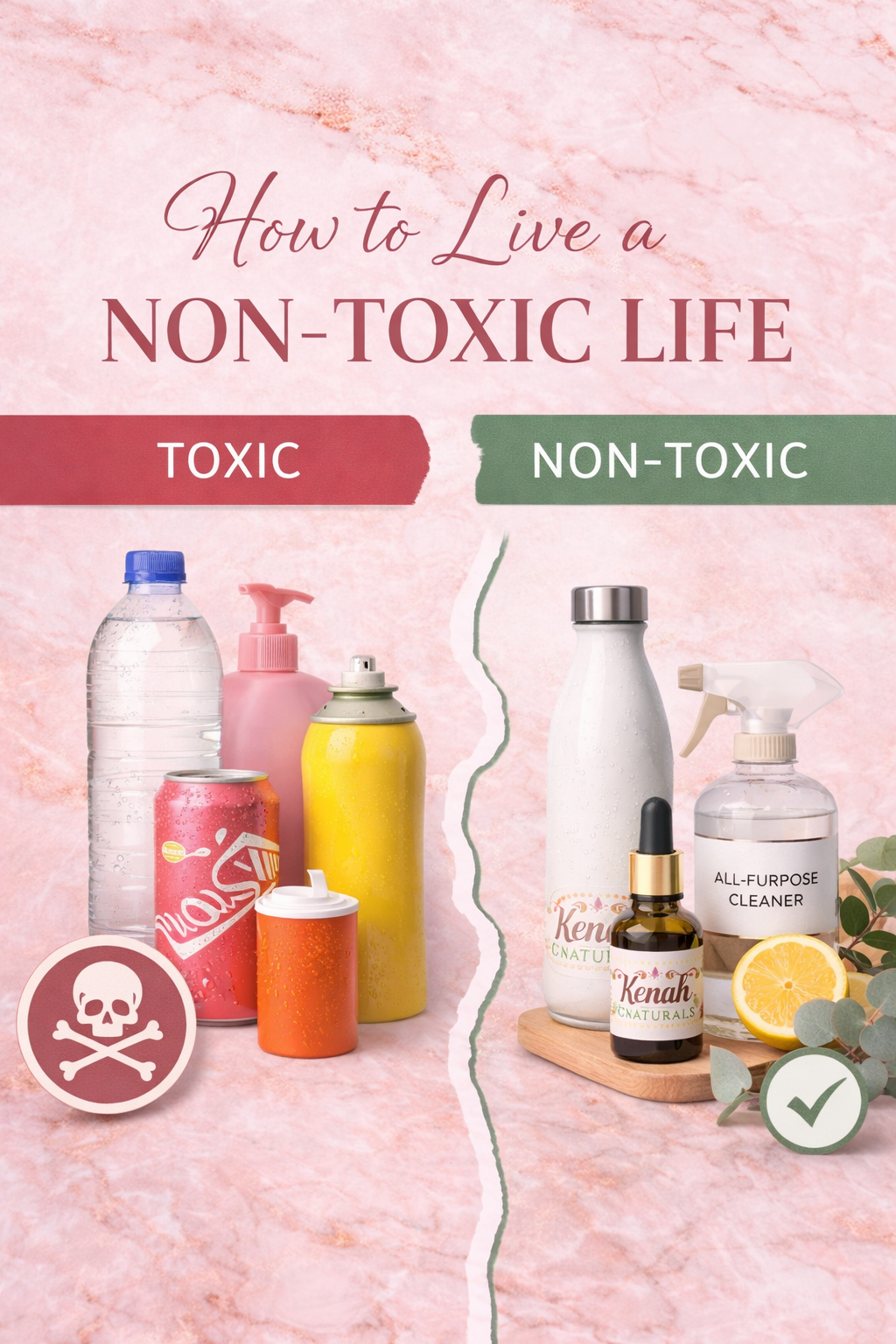
Living a non-toxic life isn’t about perfection, fear, or eliminating everything all at once. It’s about awareness, intentional choices, and reducing unnecessary exposure to substances that don’t support long-term health.
When we talk about “non-toxic,” we’re really talking about lowering the chemical load our bodies are asked to manage every day through the products we use, the air we breathe, and the habits we practice.
A non-toxic life is not restrictive. It’s supportive.
Understanding Everyday Toxic Exposure
Modern life exposes us to thousands of synthetic chemicals daily, many through personal care products, household cleaners, food packaging, and environmental pollutants. Studies show that some of these substances can disrupt hormones, irritate the skin, or accumulate in the body over time (Landrigan et al., 2018).
This doesn’t mean everything is dangerous, but it does mean what we use consistently matters.
Non-toxic living starts with understanding frequency and exposure, not fear.
Start With What You Use on Your Body dangerous
The skin is the body’s largest organ, and while it serves as a protective barrier, certain chemicals can still penetrate or cause irritation with repeated use (Draelos, 2018).
Many people begin their non-toxic journey by reassessing:
Personal care products
Hair care
Skincare
Deodorants and fragrances
Choosing products made with simple, recognizable ingredients and fewer synthetic additives can significantly reduce daily exposure without sacrificing effectiveness.
Clean Doesn’t Have to Mean Harsh
Household cleaners are a major source of indoor chemical exposure. Some conventional cleaning products release volatile organic compounds (VOCs), which can affect indoor air quality and respiratory health (EPA, 2023).
Non-toxic alternatives often rely on:
Plant-based surfactants
Natural acids (like citric acid or vinegar)
Essential oils for fragrance
Clean spaces don’t require harsh chemicals; they require consistency and thoughtful formulation.
Pay Attention to Air, Water, and Food Contact
Non-toxic living extends beyond products, it includes the environment we live in.
Small, meaningful shifts include:
Improving ventilation indoors
Filtering drinking water when possible
Reducing plastic food storage, especially with heat
Research has linked certain chemicals used in plastics and packaging to endocrine disruption, particularly with repeated exposure (Gore et al., 2015).
Again, the goal isn’t elimination, it’s reduction.
Read Labels Without Obsession
Living non-toxic doesn’t mean memorizing every chemical name. It means learning to:
Notice ingredient transparency
Avoid products with unnecessary fillers
Choose brands that prioritize clarity and responsibility
Shorter ingredient lists aren’t automatically better, but intentional formulation matters.
Progress Over Perfection
A non-toxic life is built over time.
You don’t need to replace everything overnight. Start with what you use most often. Replace items as they run out. Make choices that align with your values and your capacity.
Sustainability, personal and environmental, comes from steady, informed action, not pressure.
Living non-toxic is not about doing everything “right.”
It’s about doing what’s better, consistently.
References
Draelos, Z. D. (2018).
Cosmetic dermatology: Products and procedures. Wiley-Blackwell.
Environmental Protection Agency (EPA). (2023).
Volatile Organic Compounds’ Impact on Indoor Air Quality.
https://www.epa.gov/indoor-air-quality-iaq/volatile-organic-compounds-impact-indoor-air-quality
Gore, A. C., et al. (2015).
EDC-2: The Endocrine Society’s second scientific statement on endocrine-disrupting chemicals. Endocrine Reviews, 36(6), E1–E150.
https://doi.org/10.1210/er.2015-1010
Landrigan, P. J., et al. (2018).
The Lancet Commission on pollution and health. The Lancet, 391(10119), 462–512.
https://doi.org/10.1016/S0140-6736(17)32345-0