
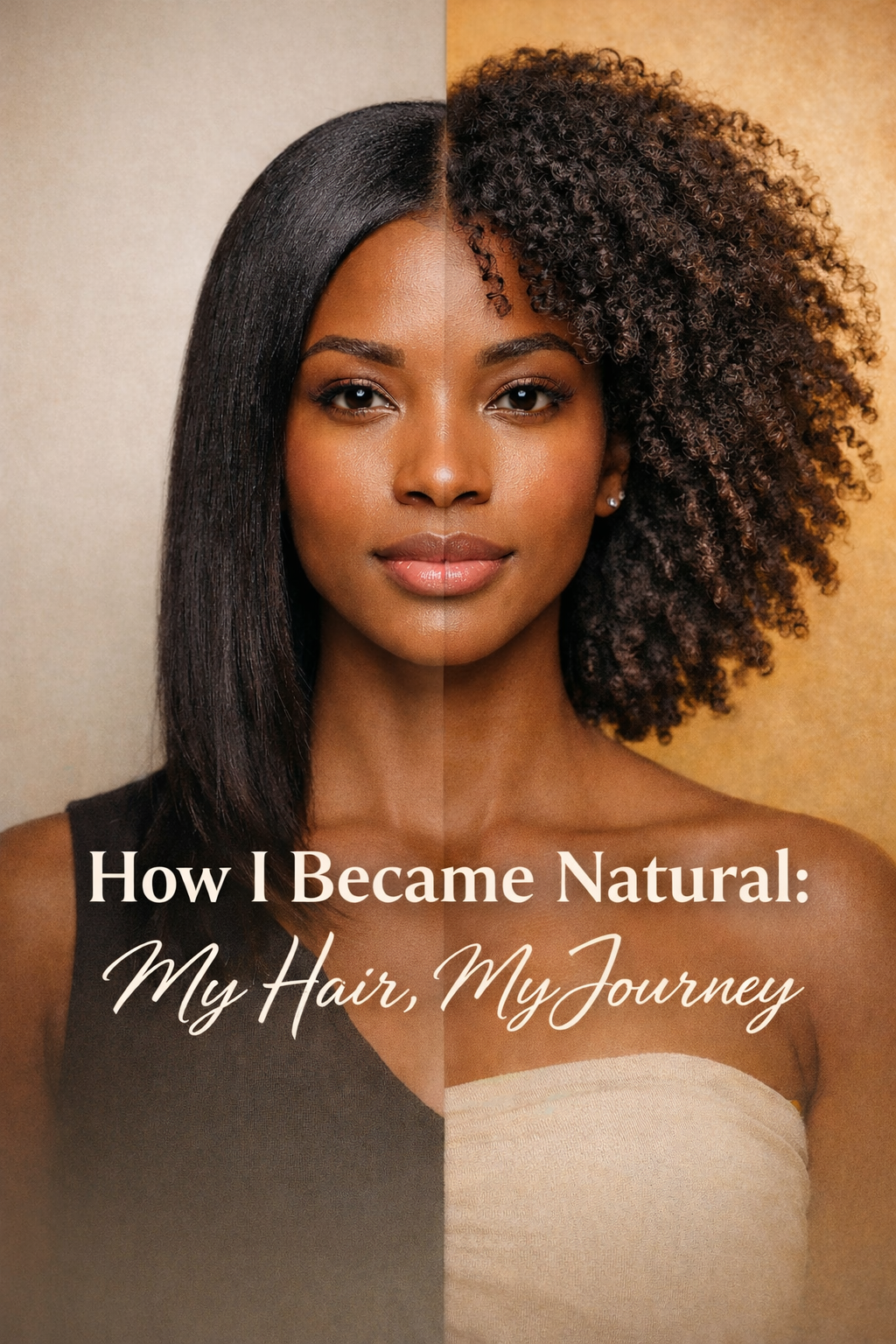
My journey to becoming natural began long before I ever made the decision to cut my hair. It began in the environment I was raised in, one that placed value on certain hair textures over others.
As a child, I was extremely tender-headed. At the age of eight, the combination of pain, expectations, and what was considered “manageable” led to my first perm. Straight hair was seen as easier, more acceptable, and more presentable. At that age, I didn’t have the language to question it; I only knew what was normalized for me. From that point on, chemicals became a part of my life, and I wore a perm for many years without truly considering the impact it had on my hair or on my identity.
As an adult, I became a mother. As my daughter grew older, she began asking questions that forced me to reflect in ways I hadn’t before. She wanted to know why her hair was curly, and mine was straight. I gave her different answers over time, but none of them fully addressed the truth. The reality was that I had altered my hair for so long that straightness had become my norm, even though it was not natural to me.
Later in life, my body went through another transition. During menopause, a section of my hair fell out. That moment marked a turning point. I had a decision to make: whether to continue covering and chemically altering my hair or to let it go entirely. I chose to cut all my hair off.
When I made that decision, I also made a commitment to myself: I would not put chemicals back on my hair. If I were starting over, I would do so intentionally. That meant learning how to care for my natural hair, understanding its needs, and unlearning everything I had been told about it being difficult or unmanageable.
At the same time, I was observing my daughter’s relationship with her own curls. She didn’t dislike her hair, but she didn’t want to wear it curly to school. I recognized that hesitation; it mirrored my own experiences growing up. I realized that if I wanted her to appreciate her natural curls, I had to first appreciate mine. I had to model acceptance, not just talk about it.
Becoming natural was not just about hair. It was about health. It was about removing toxicity from my life and making choices that aligned with my well-being. It was about education, learning that natural hair thrives with moisture, patience, and care. It was about understanding that my hair was not the problem; the misinformation surrounding it was.
Through this journey, I learned that my hair is manageable, versatile, and resilient. Everything I had been told for most of my life, that my hair was too much, too hard, or too difficult, was simply not true.
Going natural required me to reconnect with myself, my health, and my example as a mother. It taught me self-acceptance and accountability. And it reinforced the understanding that what our children see us embrace, they learn to embrace in themselves.
This is how I became natural.
This is my hair.
This is my journey.
References & Citations
National Institutes of Health
Hormonal changes during menopause and their effects on hair growth and hair loss.
NIH research highlights how menopause can impact hair density and texture due to hormonal shifts.
American Academy of Dermatology
Hair relaxers, chemical treatments, and long-term hair health.
AAD provides clinical insight into how chemical relaxers affect scalp health and hair structure.
Centers for Disease Control and Prevention
Chemical exposure and personal care products.
CDC research addresses potential health concerns related to prolonged chemical exposure.
Banks, I. (2000). Hair Matters: Beauty, Power, and Black Women’s Consciousness.
An exploration of cultural perceptions of hair and their psychological and social impact.
Rooks, N. (1996). Hair Raising: Beauty, Culture, and African American Women.
A foundational text on hair politics, identity, and cultural conditioning.